
Mediating RAF and Rights Based Matters. The Socratic Mirror and beyond.

Guide to Successfully Mediating RAF and Rights Matters by Mediate Works
The landscape of personal injury litigation in South Africa is facing a critical juncture. High Court rolls are severely congested with Road Accident Fund (RAF) matters, and provincial practice directives heavily enforce Uniform Rule 41A alongside mandatory mediation protocols In Gauteng the Mandatory Mediation Directives state that mediators "will follow a facilitative style of mediation and will refrain from expressing opinions and from advising the parties on outcomes, unless this is specifically agreed in the mediation agreement.[1]"
The Facilitative style is treated as the gold standard of mediation. Facilitative mediators are taught to function as guardians of the process, avoiding giving their own opinions, predictions, or assessments. Instead, they use a "Socratic method" of questioning—acting as a mirror to help parties reflect on their own strengths, weaknesses, and underlying interests[2].
However, RAF matters are fundamentally narrow. They rarely involve broad relational interests, community impact, or deep emotional reconciliation; they are strictly about legal merits, statutory thresholds (like the Narrative Test for serious injuries), and the actuarial quantum of financial compensation[3]. When a dispute is strictly defined by legal parameters and conflicting expert reports, pure facilitative mediation fails. Conversely, an evaluative mediator who bluntly dictates court outcomes can alienate counsel and infringe on party self-determination.
The solution is Narrow-Facilitative Mediation (often termed Analytical Mediation or Facilitative Risk Analysis). This framework allows the mediator to remain strictly non-directive without ever issuing a formal opinion, yet they ruthlessly dissect the legal merits and financial risks of the trial using targeted questioning.
MAPPING THE MEDIATORS APPROACH: THE RISKIN GRID[4]
To understand exactly where this highly strategic style fits into legal practice, practitioners rely on the Riskin Grid. Developed by American law professor Leonard Riskin, this framework maps mediation models across two intersecting axes:
The Mediator’s Orientation: Ranging from Evaluative (providing opinions and predictions) to Facilitative (asking questions and guiding process).
The Scope of the Dispute: Ranging from Broad (focusing on underlying business, emotional, or community interests) to Narrow (focusing strictly on defined legal issues and financial rights).
While traditional mediation occupies the broad-facilitative quadrant, RAF analytical mediation sits firmly in the narrow-facilitative quadrant (Rights-Based Facilitative). The scope of a road accident claim is inherently narrow governed strictly by statutory boundaries, expert joint minutes, and financial quantum. Yet, the mediator operating in this zone refuses to function as a judge, remaining strictly facilitative by keeping their personal evaluations hidden.
UNLOCKING THE "SOCRATIC" METHOD IN MEDIATION
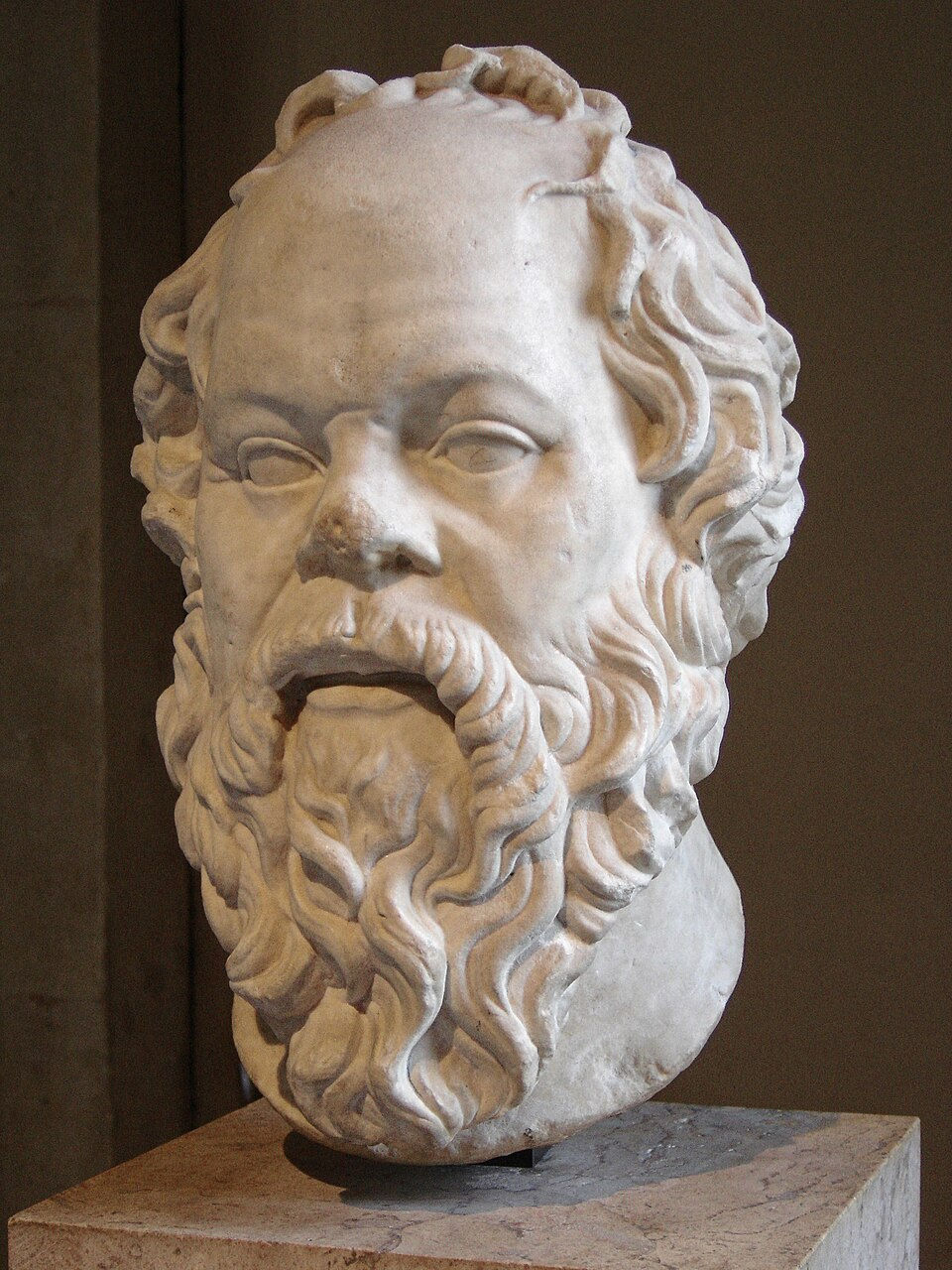
To navigate this narrow-facilitative zone effectively, the mediator employs the Socratic method of inquiry[5]. This educational and philosophical technique relies on a cooperative, disciplined dialogue of question and answer. Instead of delivering a lecture or stating a fact, the questioner poses a sequence of targeted, open-ended queries designed to force the other person to critically examine the validity of their own logic, discover gaps in their reasoning, and confront underlying truths[6].
The five step Socratic Dialogue Cycle[7]:
Receive: Actively listen to a party's initial argument or demand without interruption.
Reflect: Neutralize the emotion and paraphrase the core position back to ensure clear alignment.
Refine: Pose targeted questions to request evidence, trace the root logic, and evaluate underlying assumptions.
Restate: Have the party reformulate their position based on the flaws or fresh insights uncovered during refinement.
Restart: Take this updated, more realistic premise and repeat the loop to bring both sides closer to a shared consensus
In an RAF mediation, the "Socratic Mirror" means the mediator never tells an attorney their case is flawed. Instead, they use a structured line of questioning that leads the attorney to that exact realization on their own.
Consider how an evaluative mediator handles a disputed RAF claim versus how a Socratic, analytical mediator approaches the exact same issue:
The Evaluative Directive: "I have looked at your actuarial calculations and the RAF’s industrial psychologist report. Given the current trends in the Gauteng Division, your contingency deduction of 5% is far too optimistic for an injured individual who is already back at work. I am telling you, the court will apply at least 15%. You should settle for less."
The Socratic Inquiry: "Counsel, let’s look at your client's post-morbid employment status. Your industrial psychologist notes a return to light duty, while the RAF’s expert reports equal productivity to pre-accident levels. What specific evidence will you lead at trial to prove a 5% contingency deduction is justified? If the trial judge applies the standard 15% contingency instead, what is the exact financial impact on your net quantum calculation?"
By shifting the burden of evaluation back to the legal representatives through Socratic dialogue, the mediator bypasses defensive posturing while rigorously assessing the reality of the trial risk.
KEY BATTLEGROUNDS IN RAF ANALYTICAL MEDIATION
Because RAF matters are governed strictly by the Road Accident Fund Act 56 of 1996, the Socratic line of questioning focuses exclusively on two defined pillars: Merits and Quantum.
Pillar One: Socratic Reality Testing on Merits (Liability)
When liability is contested or the Fund alleges contributory negligence under the Apportionment of Damages Act 34 of 1956, the mediator tests evidentiary strength:
"Looking at the SAPS accident report, the point of impact is marked on the centre line. If the insured driver testifies that they never crossed into your lane, what corroborating physical evidence or eyewitness testimony will you present to establish a 100% liability split?"
"If the court finds your client was 30% contributorily negligent due to speed, how does that affect your projected recovery against your trial costs?"
Pillar Two: Reconciling Joint Minutes on Quantum
RAF matters are heavily dependent on expert testimony, including orthopaedic surgeons, occupational therapists, industrial psychologists, and actuaries. The mediator uses the Joint Minutes of these experts as the basis for their questioning:
"Both occupational therapists agree that the claimant can no longer perform heavy manual labour. However, they disagree on his capacity for sedentary work. At trial, how will you counter the defence's cross-examination on the claimant’s residual capacity?"
"Regarding General Damages, the RAF has rejected the RAF4 narrative test[8]. If we proceed to trial without an active tribunal or administrative appeal ruling, what is your legal strategy to compel the Fund to pay this head of damage?"
THE PRACTICAL MECHANICS: NAVIGATING RULE 41A PROTOCOLS[9]
To align with South African Gauteng Division’s compulsory mediation protocols, which dictates facilitative mediation, the analytical session shifts away from a joint conference toward private caucusing and sharp risk auditing:
Intense Private Caucuses: The mediator separates the plaintiff's counsel and the RAF representatives into separate rooms. This allows attorneys to answer tough, Socratic risk questions candidly without losing face in front of their clients or opposing counsel.
BATNA & WATNA Financial Math: The mediator forces both sides to evaluate their Best Alternative to a Negotiated Agreement and Worst Alternative to a Negotiated Agreement. For the plaintiff, the WATNA includes the risk of party-and-party cost orders or prolonged trial delays. For the RAF, the WATNA involves statutory interest on late payments and adverse judicial cost awards.
Drafting the Rule 41A Compliance Report: Whether the mediation succeeds or ends in a deadlock, the mediator and parties must conclude a formal joint minute and mediator's report. This report ensures compliance with court directives and protects the matter from being struck off the trial roll.
BEYOND FACILITATIVE AND EVALUATIVE MEDIATION
Thought leaders like Charlie Irvine[10] and John Lande argue that restrictive labels of mediation styles, have devolved into "semantic free-for-alls" that polarise rather than illuminate. In practice, these terms are often used as weapons or shields. Practitioners frequently use "evaluative" as a pejorative, rarely a compliment, to describe an opponent's rigidity, while claiming their own commitment to a "facilitative" ideal. This creates a binary, "good vs. bad" worldview that fails to capture the dynamic reality of mediation, where skilled neutrals often switch tactics mid-session to meet the parties' needs.

John Lande famously compares this confusion to the whims of Humpty Dumpty in Through the Looking-Glass[11], where words mean whatever, the speaker chooses them to mean. When one professional describes an "evaluative" approach, they may be describing an elephant’s trunk while their colleague believes they are discussing its tail. This lack of a shared behavioural vocabulary undermines informed decision-making and leaves parties in the dark[12].
Riskin later revised his grid, replacing "Evaluative/Facilitative" with "Directive/Elicitive," recognizing that restricting a mediator to purely elicitive questioning ignores the dynamic needs of disputants. He proposed the "New New Grid"[13], which shifted the focus away from mediator orientation and toward participant influence. The lesson for today's strategist is clear: the scope of the problem being defined matters far more than the interpersonal style of the person at the head of the table.
Riskin and other scholars note that mediator styles are highly fluid, shaped by personal beliefs, timing, participant dynamics, and subject matter. For example, a mediator might use evaluative techniques for employment cases but facilitative ones for neighbourhood disputes. Styles often shift during a single session; a mediator may start with facilitative open discussion but switch to evaluative pressure as deadlines approach. They can also blend styles by proposing specific evaluative solutions and then using facilitative techniques to debate them. These styles impact both the process and the substantive outcomes of the dispute. Beyond standard facilitative, evaluative, and transformative frameworks, alternative models categorize mediation based on personal behaviour, commercial needs, or legal and social norms. Grasping these diverse behaviours and models is critical to understanding how mediator styles intersect with mandatory requirements for impartiality[14].
DO WE NEED TO RETHINK THE PROCESS?
The facilitative narrow mediation approach to mediating RAF matters seems to be working. However, the possibility exists for mediators and policy makers to be more fluid in respective of the mediation approach. The Gauteng Directives allows parties to agree to a style of mediation other than the facilitative approach. I would propose that there is a wide scope of opportunity in advancing broader training for mediators on the various styles of mediation and for parties to consider what is appropriate in the circumstances.
There is scope to consider a range of potential processes that may provide opportunities under certain circumstances.
Expert Advisory Mediation (The Evaluative Approach) Instead of a Socratic mirror, use the weight of expertise. In an Evaluative-Narrow model, the mediator actively assesses the strengths of the legal claims, predicts the likely court outcome, and proposes concrete settlement figures based on precedent and actuarial reality.
Early Neutral Evaluation (ENE) Instead of calling it mediation, courts could explicitly shift to Early Neutral Evaluation (ENE). In ENE, an expert evaluator assesses the merits and weaknesses of both sides and provides a suggested resolution very early in the case. This aligns perfectly with the quantitative nature of RAF claims and removes the pressure on the neutral to play the role of a "peacemaker." CEDR has used this in its mediation of Clinical Negligence matters in the UK[15].
Med-Arb (Mediation with Arbitration) To prevent the RAF from using mediation merely as a delaying tactic, parties could agree to a Med-Arb process. The session begins as standard mediation, but if no agreement is reached, the neutral immediately switches hats and becomes an arbitrator who imposes a binding decision. This guarantees finality and circumvents the High Court backlogs entirely.
A Dedicated Road Accident Fund Tribunal Systemically, many legal scholars argue that RAF claims should be removed from the High Courts entirely. Modelled on the CCMA (Commission for Conciliation, Mediation and Arbitration), a specialized statutory tribunal would utilize inquisitorial, expert-driven processes to assess claims swiftly, eliminating the adversarial bottlenecks and exorbitant legal costs of the current system.
CONCLUSION: EFFICIENCY OVER IDEOLOGY
In South African personal injury law, mediation is not about restoring harmony; it is a pragmatic tool designed to resolve quantified disputes efficiently. By mastering Narrow-Facilitative Mediation, a neutral can guide the most rigid legal teams toward a realistic settlement. This approach respects the boundaries of statutory law and protects party autonomy, using targeted, Socratic questioning to resolve claims without adding to the judiciary's backlog. Mediators need to avoid being rigid in choosing a style and approach to mediation. It is increasingly important to direct the parties towards a suitable model. The demands on the courts, mediation systems, state attorneys, and the RAF might necessitate exploring the variety of available approaches.
Mediate Works tailors its processes meticulously before any intervention takes place, ensuring that each situation is approached with a customized strategy that reflects the unique circumstances and needs of the parties involved. This preparatory phase is crucial, as it allows Mediate Works to understand the context, dynamics, and specific challenges that may be present in a conflict or dispute. Get in touch info@mediateworks.com
For training as a RAF Mediator contact Conflict Dynamics

EBRAHIM PATELIA
MEDIATE WORKS PTY LTD
[1] Section 6.4.4. of the Gauteng High Court Mandatory Mediation Protocols. https://www.saflii.org/za/other/ZARC/2025/2.pdf
[2] Stulberg Joseph B. Legislative Versus Evaluative Mediator Orientations: Piercing the "Grid" Lock; Florida State University Law Review; Volume 24 Issue 4 Article 7; 1997. https://ir.law.fsu.edu/cgi/viewcontent.cgi?referer=&httpsredir=1&article=1450&context=lr
[3] Dr Piet Engelbrecht; Aprav Solutions Group 1- Substream 5- Medico-Legal Evaluation & Reporting; 2024
[4] Patelia & Chicktay. Appropriate Dispute Resolution: A Practical Guide to Negotiation, Mediation and Arbitration (Third Edition), Pages 92 &3, Lexis Nexis, 2024 and https://scholarship.law.ufl.edu/cgi/viewcontent.cgi?httpsredir=1&article=1684&context=facultypub
[5] The Socratic method is named after the ancient Greek philosopher Socrates who pioneered a cooperative form of argumentative dialogue. He did not lecture his students; instead, he pretended to know nothing and asked targeted questions to expose flaws in their logic and guide them to deeper truths.
[8] The RAF4 Narrative Test is a legal and medical assessment tool used in South Africa by the Road Accident Fund (RAF) to determine if a vehicle accident victim has suffered a "serious injury." Passing this test is a mandatory legal requirement for a claimant to qualify for General Damages (compensation for pain, suffering, loss of amenities of life, and disfigurement) https://www.saflii.org/za/journals/PER/2012/23.html
[9] https://www.judiciary.org.za/images/Directives/Directives_2025/MEDIATION PROTOCOL FOR THE GAUTENG DIVISION - 22042025.pdf
[10] John M. Lande, Charlie Irvine's Challenge to Mediators to Describe Your Mediation System (2023)
[11] In Lewis Carroll’s 1871 novel Through the Looking-Glass, Humpty Dumpty appears as a self-important, egg-shaped character. He is notably arrogant and serves as a major figure exploring themes of language, miscommunication, and existential wordplay. Humpty Dumpty famously insists that he can make words mean whatever he wants them to mean.
[12] Lande John; How AI Can Help Mediators Say What They Really Mean; University of Missouri School of Law Scholarship Repository; 6-2025. https://scholarship.law.missouri.edu/cgi/viewcontent.cgi?article=2266&context=facpubs
[13] Leonard L. Riskin, Decision-making in Mediation: The New Old Grid and the New New
Grid System, 79 NOTRE DAME L. REV. 1 (2003-2004)
[14] EXON Susan Nauss; The Effects That Mediator Styles Impose on Neutrality and Impartiality Requirements of Mediation; University of San Francisco Law Review; Vol. 42, Page 577



Comments